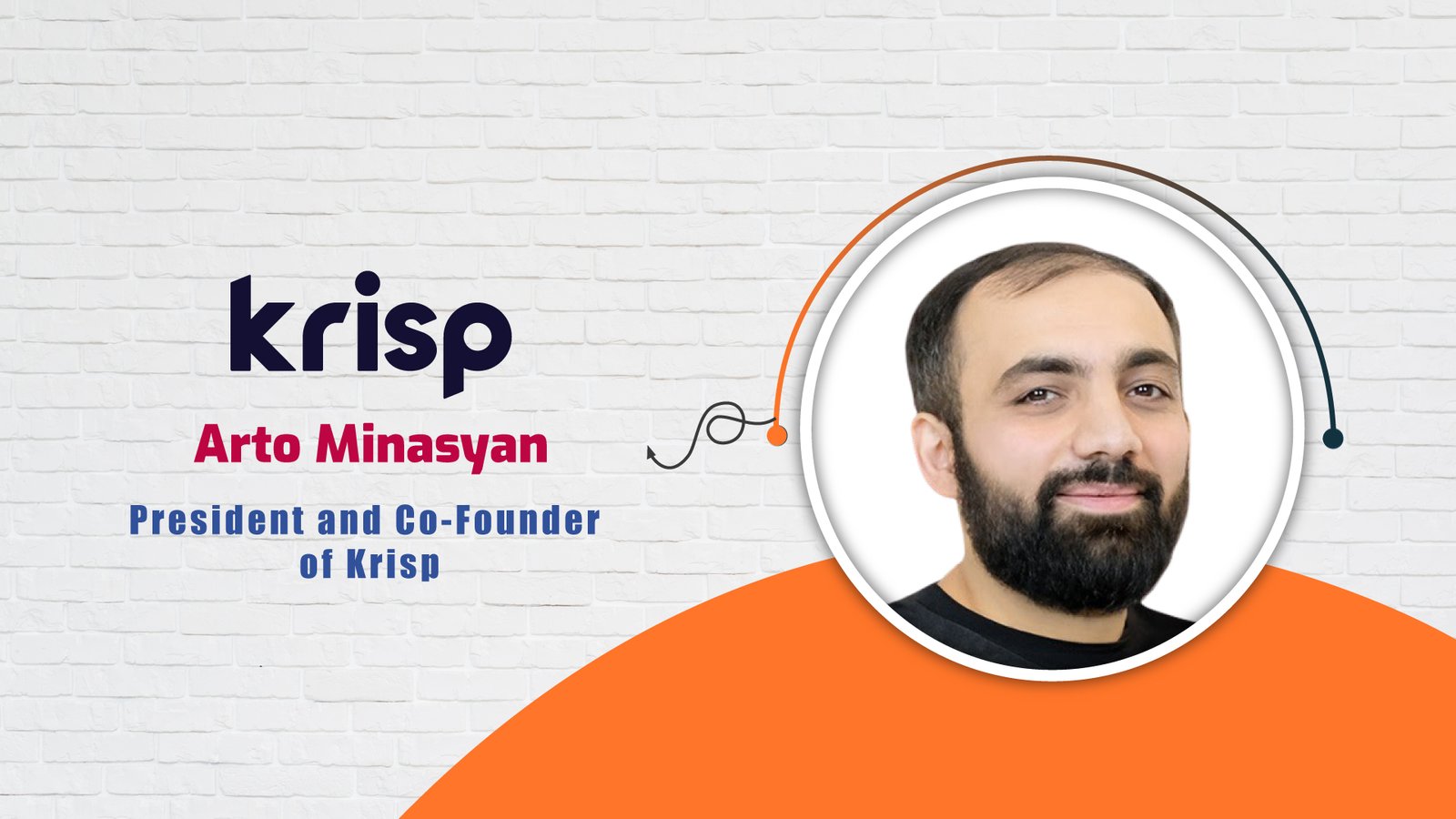
An in-depth AITech interview with Arto Minasyan, President & Co-Founder of Krisp, on accent clarity, AI-powered communication, and building inclusive global workplaces.
Welcome at AI-TechPark, Arto! To start, could you please share a bit about your professional journey and what led you to co-found Krisp?
I’m Arto Minasyan, a serial tech entrepreneur and co-founder of Krisp.ai. I’m passionate about building great teams, creating innovative AI products, and growing enduring companies. Over the years, I’ve co-founded multiple startups, and with a PhD in Math and an MBA, I’ve been able to combine deep technical expertise with business strategy to build successful AI companies.
Accent clarity is often overlooked—how do you see its impact on productivity and team collaboration in today’s global workforce?
Accent clarity plays a big role in how teams actually get work done together. In a global workforce, people are often fluent in the same language, but can be understood differently based on how they sound. That creates small but recurring communication barriers like repetition for clarity, missing key details, or hesitating to contribute to fast-moving discussions.
Over time, those moments of friction add up and make collaboration feel harder than it should be. When you remove that barrier, conversations become smoother and the cognitive load on employees decreases. That shift leads to increased confidence and participation, giving teams more speed and clarity, whether they’re solving a problem with a customer or just brainstorming with colleagues.
Many employees face bias related to their accent. How does accent bias affect confidence and workplace inclusion?
As a non-native English speaker, I know how important it is to be understood the first time you speak and the direct impact accent bias has on your confidence. It often shapes how someone is perceived, even when it has nothing to do with the quality of their work or capabilities.
Accent bias doesn’t just affect individuals; it also shapes the culture of a workplace. When people feel judged for the way they speak, they contribute less and lose confidence in their ideas. That creates invisible barriers that hold back both talent and collaboration. But when that bias is removed, everything changes. People speak up more freely, they feel respected, and inclusion becomes part of the way a team communicates every day.
What role does technology play in reducing communication-related stress and ensuring that every voice is heard clearly at work?
Technology should make communication easier, not harder. In many workplaces, communication-related stress often comes from not being understood, whether that’s repeating yourself or worrying that your accent or background noise is distracting. AI can reduce that friction with tools like noise cancellation or accent conversion. When conversations are clear from the start, people can stay focused on the discussion instead of how they sound. That creates the space for every voice to be heard with confidence and limited interruptions or hesitation.
From your perspective, how can companies proactively address accent bias and build more inclusive cultures?
Accent bias won’t go away on its own. Companies need to acknowledge it as a real barrier and address it with intention. That starts with creating awareness and making sure employees know that being understood is not about changing who they are. Training, open conversations, and transparency around new tools can all help combat accent bias. Technology can then play a supportive role, making communication smoother so teams can focus on productivity and collaboration rather than accents.
Krisp is known for innovation in AI-powered communication tools. Could you share how your platform helps bridge communication gaps in diverse workplaces?
At Krisp, we’ve focused on building technology that removes the everyday friction that gets in the way of clear communication. In diverse workplaces, those challenges can come from different places, from background noise, unfamiliar accents, or simply the complexity of keeping up with fast-moving conversations. Our platform addresses each of these in a way that’s simple and accessible for employees.
Our Noise Cancellation feature eliminates distractions in real time, so conversations stay clear whether someone is working from a busy office, a home environment, or a contact center. Accent Conversion helps global teams and customer-facing agents be understood the first time, improving comprehension without requiring any training or deep technical knowledge. Our AI Meeting Assistant automatically captures detailed notes, generates concise summaries, and highlights key action items, reducing the burden of multitasking and allowing employees to stay fully engaged in the discussion.
By combining these features, we help organizations create environments where people can collaborate more naturally, speak with confidence and feel understood from the start. It’s not just about removing barriers, it’s about building trust and confidence across every conversation.
Looking ahead, how do you see accent clarity and communication technologies shaping the future of hybrid and remote work?
Hybrid and remote work have made clear communication more important than ever. When teams aren’t in the same room, small gaps in understanding can become bigger obstacles, whether that’s from poor audio, heavy accents, or noisy environments. That’s where technologies like accent conversion, noise cancellation, and AI meeting note taker come in to ensure distributed teams communicate clearly.
Looking ahead, I see these tools becoming standard, not just nice-to-have features. The real opportunity lies in making every employee feel equally understood, no matter where they’re based or how they sound. That’s how organizations will keep hybrid work both productive and human.
On a personal level, what strategies or principles guide you as a leader in navigating challenges and driving innovation?
For me, leadership always comes back to simplicity. Technology is complex by nature, but people should experience it as simple and useful. That principle guides how I think about product design, communication, and even company culture.
Another strategy I lean on is listening closely to the people closest to the problem. Our best ideas at Krisp often come from agents, engineers, or partners who see challenges first-hand. My role is to clear space for those voices and help translate their insights into solutions that scale.
I also believe that leadership is a journey of continuous learning and self-improvement. The challenges we face evolve, and so must we as individuals. By staying curious, seeking feedback, and pushing myself to grow both personally and professionally, I can better support my team and ensure that the companies I help build remain innovative and resilient.
What advice would you give to professionals who may feel held back or less confident because of their accent in the workplace?
My advice is to never underestimate the value of your perspective. An accent might sometimes feel like a barrier, but it’s also a reflection of the unique background and experiences you bring to the table. In my own career, I’ve seen that what truly matters is the substance of your ideas and how confidently you communicate them. People connect with clarity, authenticity, and trust – not with having the ‘perfect’ accent. Remember, what you say will always carry more weight than how you sound, and shifting your mindset toward that can help you find greater confidence in any environment.
Finally, what closing thoughts would you like to share with our readers about the importance of clear, inclusive communication in the future of work?
I believe the future of work will be defined by how well we preserve humanity in our conversations. Technology will keep evolving, but its real value lies in helping us listen better, not just talk faster. Inclusive communication ensures that ideas aren’t lost in translation and that collaboration isn’t limited by geography or circumstance. If we can design tools that honor the human voice while

Arto Minasyan
President and Co-Founder of Krisp
I’m Arto Minasyan, a serial tech entrepreneur and co-founder of Krisp.ai. I’m passionate about building great teams, creating innovative AI products, and growing enduring companies. Over the years, I’ve co-founded multiple startups, and with a PhD in Math and an MBA, I’ve been able to combine deep technical expertise with business strategy to build successful AI companies.