Moving from assistants to autonomous agents requires a behavior-based security model to ensure fearless innovation without business risk.
Ben, please tell us a bit about yourself and Zenity?
I’ve always been fascinated by how technology empowers people and equally, how it can expose them to risk if it isn’t managed responsibly. My career has always lived at that intersection. I’ve spent years helping organizations protect what matters most while still embracing innovation, and that perspective is what ultimately led me to starting Zenity.
AI represents one of the most exciting and transformative shifts we’ve ever seen in technology. It’s not just another wave of innovation; it’s a complete reimagining of how work gets done, how creativity is expressed, and how businesses operate. For the first time, software can think, reason, and act on behalf of humans, making it both one of the greatest enablers and disruptors of our time. The possibilities are limitless, but so is the responsibility to guide this transformation safely and thoughtfully.
Zenity was founded because we saw an accelerating gap between how people build technology and how it’s secured. At first, it was citizen developers building sophisticated apps and automations outside of the traditional software development process. Now, it’s AI agents that can reason, act, and make decisions across every part of the business, that are taking the enterprise by storm. Zenity is the first unified security and governance platform purpose-built for AI agents. We help enterprises adopt and scale AI safely, giving them visibility, guardrails, and control from the moment an agent is created to how it behaves in the real world. At our core, we’re here to enable what I call fearless innovation, empowering companies to move fast with AI, without ever compromising on security or trust.
Zenity has helped define a new category around AI security. What changes in enterprise IT and business-led development signaled the need for a new security model?
We’re living through one of the biggest disruptions we’ve ever had in enterprise technology. The way software is being created has changed entirely. Instead of waiting on IT, employees across every department can now build their own automations, applications, and agents, often using tools that don’t expose any code at all.
That’s a huge opportunity for innovation, but it’s also created a new kind of security blind spot and attack surface. Traditional tools were built for systems with clear perimeters, fixed permissions, and human decision-makers. Trying to apply traditional security mechanisms is failing- AI agents don’t follow similar human or system usage patterns – they learn, act, and connect across other AI agents and business ecosystems dynamically- they reinvent themselves in Runtime
What enterprises need now is a solution that first of all doesn’t slow them down- everyone needs to become AI first, but do so- organizations need to understand what AI Agents are meant to do, how they really behave, and accordingly- detect and prevent wrong doing.. Zenity was built specifically for that world, giving organizations a way to monitor, govern, and secure agents across every environment, without slowing down the pace of innovation.
What makes Zenity’s approach to securing AI different from traditional security tools, and which capabilities are true game-changers for enterprises?
AI Agents require a new security stack, as traditional security tools weren’t built for how AI works today nor where it is going. They’re designed for static systems including software with predictable inputs, code you can scan, and clear network perimeters. But agents are dynamic, adaptive, and can be autonomous. They reason, act, and learn across multiple systems in real time. That means the traditional layers of defense (such as application scanners, DLP, prompt analysis, IAM, or network monitoring) can’t see or control what’s actually happening inside an agent’s workflow. Gartner and other leading thought leaders in this space have made this point clearly – protecting AI requires purpose-built visibility, governance, and runtime enforcement. You can’t retrofit yesterday’s tools into this new environment.
We secure AI based on how it behaves (looking at agent anatomy, autonomy, and intent), what data they access, which systems they connect to, other agents they communicate with, and the actions they take. Our platform covers the full lifecycle from the moment an agent is configured, to how it runs in production, to how AI is governed over time.
What enterprises find most powerful are our inline controls such as the ability to detect and stop unsafe agent behavior before it causes harm. It’s transformational because it allows companies to move forward with AI confidently, knowing innovation and security can finally go hand in hand.
As enterprises move from assistants to fully autonomous AI agents, what new risks are emerging, and how should organizations adapt?
We’re moving from assistants that help to agents that act, and that changes everything. Assistants generate insights; agents make decisions, move data, and take actions across business systems on their own. It’s incredibly powerful, but it also introduces new risks we’ve never had to manage before.
We’re already seeing vulnerabilities like poisoned memory, tampered knowledge sources, and over-permissioned tool access. The Anthropic findings that came out earlier this month seemed to reinforce existing security concerns. They revealed a nation-state attacker automated nearly 90% of the entire attack lifecycle with Claude Code. The use of these autonomous agents allowed for limitless scale and speed that simply overwhelmed existing tools and workflows. This is just the tip of the iceberg when it comes to what compromised agents could do inside an enterprise environment
Organizations need to start thinking of agents the same way they think of users. That means visibility into what agents exist, what they can access, and how they behave over time. The companies getting this right aren’t locking innovation down, they’re putting the right guardrails in place so they can scale safely and confidently.
Zenity Labs’ AgentFlayer research made headlines. What did it reveal about AI security, and how does it influence your roadmap?
AgentFlayer is a major moment in the security industry. Our research team uncovered a new class of 0click exploit chains that allowed attackers to silently hijack agents, exfiltrate sensitive data, or manipulate outcomes without any user interaction, on any major enterprise agentic system. In other words, an attacker could compromise an AI agent’s logic and have it carry out harmful actions on its own – no phishing, no prompts, no clicks required.
What made this discovery so important is that it exposed a blind spot across even the most advanced AI ecosystems. These platforms are evolving incredibly fast, but the security assumptions around them haven’t caught up. AgentFlayer proved that agents themselves (not the models or prompts behind them) are the target.
That research directly shapes how we build. It validated the need for deep, runtime visibility into how agents behave, and the ability to detect and block unsafe actions in real time. It also reinforced our commitment to transparency and collaboration; we work closely with platform providers to help them build safer ecosystems for everyone. AgentFlayer is a reminder that innovation and security must evolve together.
Zenity integrates with major AI and enterprise platforms. How do these partnerships shape your roadmap and help customers adopt AI safely at scale?
Partnerships are core to how we operate. We know that enterprises don’t want to choose between innovation and security, they want both. We work closely with platform leaders to share research, align on emerging risks, and design security and governance capabilities that are native to how enterprises already work. The goal is to make security seamless, not a bolt-on that slows innovation down.
For customers, that means confidence. They can build and scale agents across their environment knowing that security and governance are built in from day one. These partnerships allow us to innovate faster too, ensuring that Zenity continues secure AI everywhere so we’re in lockstep with the platforms to drive the best outcomes.
What are some of the most compelling real-world use cases you’re seeing from customers who have successfully scaled AI agents securely?
What’s inspiring is how quickly organizations are moving from pilots to production once they have the right foundation in place. Scaling agents securely really does require security from the start, and we’re seeing how much of a business enabler that becomes. When a business analyst builds an agent to automate an internal review process or synthesize analysis, that agent consistently follows organizational policies and produces reliable, high-quality outcomes because the right guardrails are already in place.
We’re seeing this across coding agents, business workflow agents, and embedded SaaS agents like Salesforce’s Einstein or ServiceNow copilots. In each case, security ensures that these agents, which often have access to perform critical actions, are only doing what they’re supposed to do and nothing more.
The most compelling part isn’t one standout use case, it’s the pattern. The organizations leading the way are treating AI and security as partners. They’re not slowing things down with controls; they’re using those controls to move faster with clarity and confidence, knowing their agents can scale safely across the enterprise.
How are evolving frameworks like the EU AI Act or NIST AI RMF shaping enterprise approaches to AI-agent governance and what role will the human-in-the-loop play in ensuring accountability?
Similar to what we’ve seen with security and innovation, the regulatory landscape is also at an exciting inflection point. For once, policy and technology are evolving almost in parallel. Frameworks like the EU AI Act, NIST’s AI Risk Management Framework, and the U.S. AI Action Plan are all pushing forward at record speed – a big change from past innovation cycles where governance often lagged years behind adoption.
What we’re seeing is a real global effort to bring order and accountability to AI. The EU AI Act is taking a regulate-first approach (setting risk-based categories and mandating transparency) while the U.S. is leaning toward innovation and leadership, with NIST establishing practical guidance that organizations can apply today. Together, they’re helping enterprises move from simply experimenting with AI to adopting it responsibly, with governance as a core design principle rather than an afterthought.
The one area still underserved is agents. Policymakers are starting to recognize that gap, but enterprises can’t wait for regulation to catch up. Security teams need to identify their own strategy using existing frameworks and best practices available today to inventory agents, define access and accountability, monitor behaviors, and enforce policies across the entire lifecycle.
That’s also where the human-in-the-loop remains critical. Humans aren’t being replaced; they’re becoming the layer of oversight that ensures trust, fairness, and context. Zenity helps by giving organizations the visibility and guardrails needed so that when humans intervene, it’s informed and meaningful.
Fast-forward three to five years, what will the AI-enabled enterprise look like, and what role do you envision Zenity playing in that future?
In this space, so much can happen in one year, let alone three to five. What I can tell you is that organizations are already on the path to embracing AI agents as digital colleagues – doing things like updating records, managing workflows, handling customer interactions, and making decisions that directly impact the business. Agents will continue to become as fundamental as employees or applications are today and we’ll see agents orchestrating with one another, achieving complex tasks.
That future brings both incredible potential and enormous responsibility. Enterprises will need a way to govern, monitor, and trust what these agents are doing at scale. Security will no longer be a separate layer – it will be built into the very fabric of how AI operates.
And Zenity will be there to partner with these organizations every step of the way. We’re building the security and governance foundation that makes this next generation of AI possible – giving enterprises confidence that every agent, in every environment, is acting safely, transparently, and in line with company policy.
What advice would you give CISOs and security leaders who are looking to prepare their organizations for the next wave of AI-agent adoption?
My biggest advice is simple, don’t wait for the technology, or the regulation, to define your strategy. Define it now.
The shift to agents is already happening inside every enterprise, whether it’s sanctioned or not. The organizations that succeed won’t be the ones that rush in recklessly, or the ones that freeze out of fear. They’ll be the ones that prepare intentionally putting visibility, policy, and accountability in place early so innovation can move safely.
Treat agents the same way you treat users and applications. Understand what they’re connected to, what data they can access, and how they make decisions. When you build that foundation of trust from the start, you enable your teams to move faster not slower.
Ultimately, AI security isn’t about restriction; it’s about confidence. The companies that embrace that mindset will lead the next era of innovation not just by using AI, but by using it responsibly.

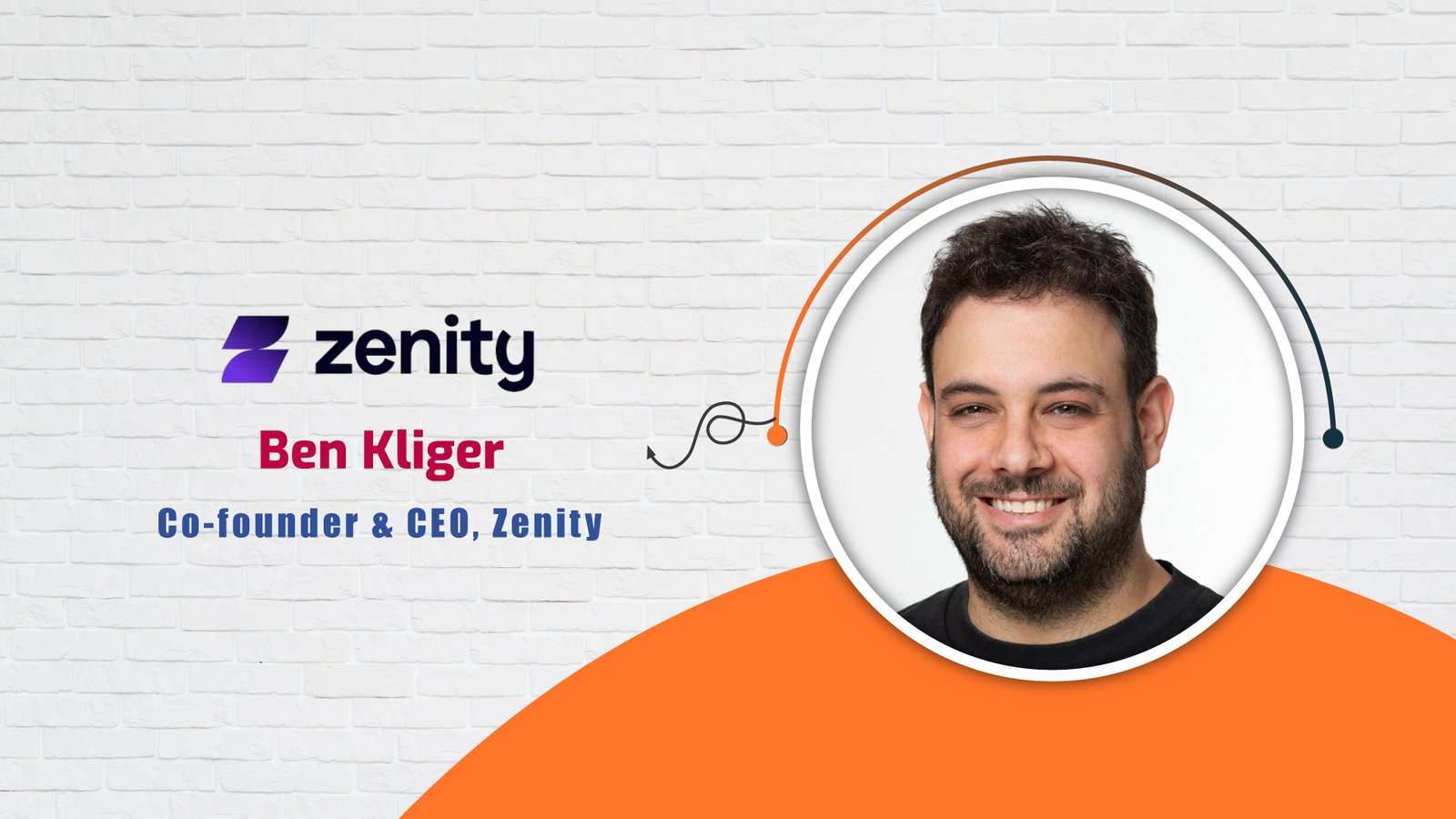
Ben Kliger
Co-founder & CEO, Zenity
Ben Kliger is the proud father of two daughters who serve as a constant source of inspiration in his daily life.
As the Co-Founder and CEO of Zenity, Ben leads the industry’s first security and governance platform dedicated to AI Agents. Under his leadership, Zenity provides protection regardless of where these agents are built or consumed, or who created them—an “everywhere” approach he champions with literal conviction.
Throughout his entire professional career, Ben has been immersed in the cybersecurity sector. He is particularly passionate about the enablement aspect of security and how it intersects with the ongoing wave of global digitalization.
He holds a deep-seated belief that Agentic AI will fundamentally transform how the world operates, communicates, and grows. His mission at Zenity is to democratize this technology, ensuring that any individual within an enterprise can build and utilize AI Agents without compromising the business’s security or privacy.