
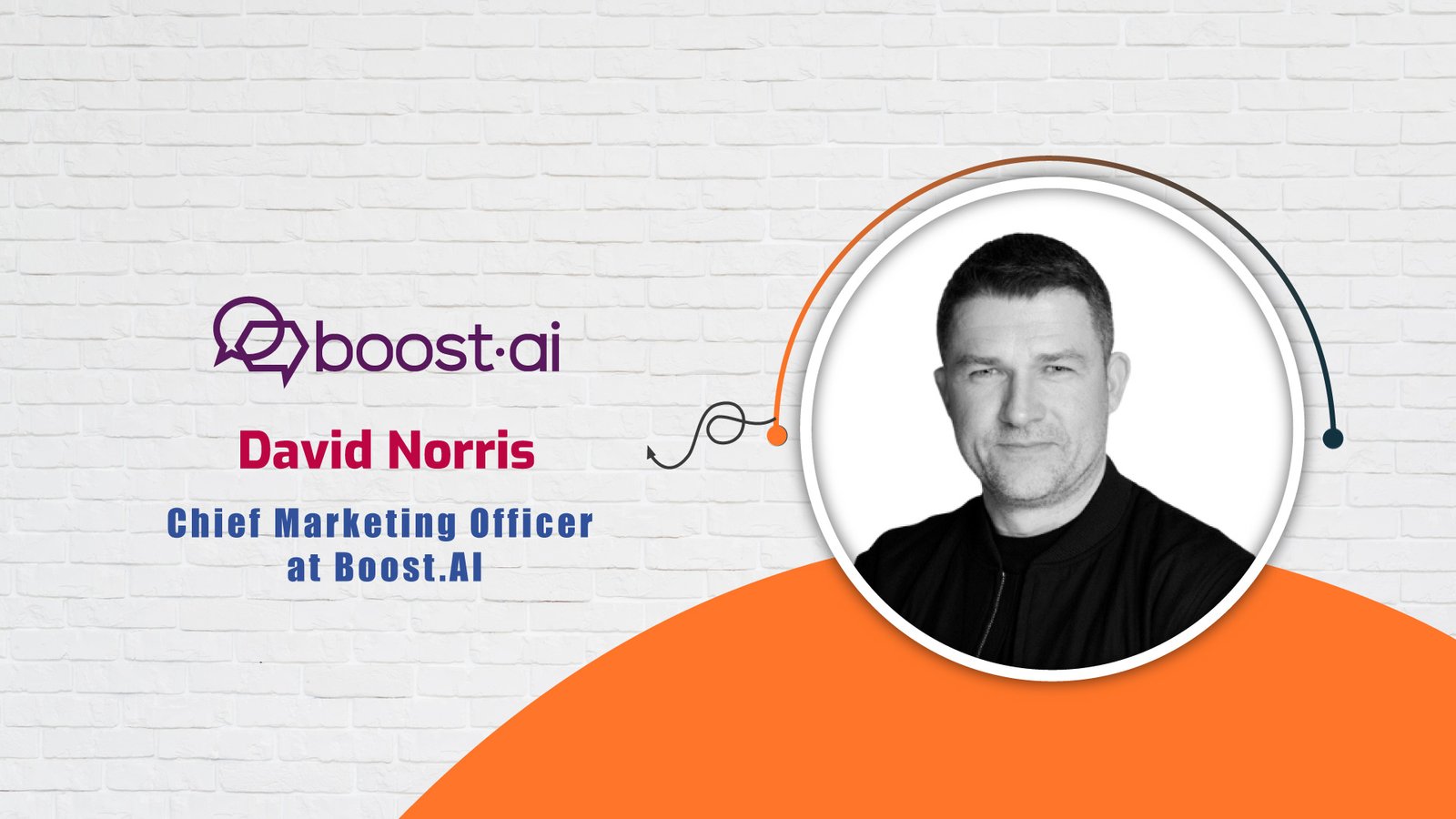
From Agencies to AI Trust: How Boost.ai’s CMO on Storytelling, Innovation, and Building Customer Trust in Regulated Industries with Conversational AI
David, you bring two decades of experience across media agencies, creative agencies, and platform-side roles, most recently leading global marketing strategy at Boost.ai. Could you walk us through your professional journey?
Of course. While my experience has not been exactly linear, every role feels like it has led me here to be a CMO. My experience has always been tied to storytelling, helping brands craft meaningful narratives that merge strategy with compelling creative. I’ve worked across agencies and platforms, including Snap INC., Mindshare, and TBWA/Media Arts Labs – Apple’s dedicated creative agency. Each role deepened my appreciation for how technology influences the way we connect and communicate every day, and I’ve been so lucky to work with some of the biggest and best brands on the planet. Ultimately, this fascination led me to my current role as CMO of boost.ai. Today, I’m working to shape and share boost.ai’s unique story, amplifying the successes our customers have experienced in deploying AI Agents, that enable their teams and customers to trust every conversation.
How has this diverse background shaped your approach to marketing and innovation in the AI space?
The pace of innovation in AI is unlike any other technology to come before it. This has introduced an interesting challenge for marketers in every company, as an entirely new language has emerged around AI, ranging from agentic to voice AI. In working with so many brands thirsty for innovation throughout my previous roles, one thing has become clear. Messaging without substance tends to unravel quickly, especially in a space evolving as fast as AI. A compelling narrative is crucial, but with the constant flow of headlines around AI failures and AI washing, customers have become a clear differentiator in how we approach sharing the boost.ai story.
Trust is often cited as a crucial factor in customer experience, especially with the rise of conversational AI. Why do you believe enterprise leaders must prioritize trust in the customer journey today?
For any number of issues, the first and most obvious choice would be to phone up a brand, wait, and then talk to somebody. Now, if the person who picked up the call was excellent at their job, your problem was resolved, and you didn’t think much of it. However, if they were rubbish, something interesting would happen. You would likely be annoyed at that person, not the brand.
Today, however, it seems the result of bad interactions is shifting. With the rise of customer expectations because of ChatGPT and others, and the parallel rise of AI-enabled customer interfaces, the same burden of loyalty now is fully on the shoulders of the brand, not the individual service representatives. AI is becoming the literal voice of the brand, and therefore, trust is fundamental. It has to work, it has to understand, it has to resolve. The first time, and every time.
Today, the stakes are higher. Every AI interaction either strengthens or weakens customer trust. There’s rarely a neutral outcome.
We work largely with regulated industries, such as banking, insurance, and telecommunications, where mistakes made by AI Agents can cause much more than damage to a brand. While these companies may potentially face fines and penalties from their governing bodies, we believe the importance of trust should be prioritized at the same level by every leader. Automation and scalability are critical to evolving customer service, but without trust, conversational AI will remain limited in impact, more of an FAQ page than a strategic tool.
What are the biggest challenges that regulated industries face when adopting AI technologies, particularly conversational AI?
For regulated industries, risk mitigation will forever remain a core sticking point. Sandbox environments and testing studios are features that can help to overcome the fear of AI agents getting answers wrong, but ultimately, it all comes down to stakeholder buy-in.
Legacy tools didn’t carry the same perceived risk that AI does, which is why involving stakeholders early in the implementation process is so important. By involving all stakeholders, necessary guardrails can be discussed and set, ensuring AI Agents refrain from unwanted actions or responses, which is why it’s essential to understand the capabilities and limitations of any generative model you plan to use.
How can companies in highly regulated sectors balance the need for innovation with compliance and consistency requirements when implementing AI-driven customer solutions?
For leaders in regulated industries, compliance isn’t a checkpoint; it’s the barometer for AI viability. At the same time, compliance cannot be the driving force behind AI implementations.
With the right guardrails, AI-driven customer solutions can be delivered in a ramped approach, starting with a limited number of live topics and quickly expanding to a far wider scope of coverage once initial trust is established with all involved. This approach allows accuracy and innovation to grow in step with the organization’s level of comfort and oversight.
What role does AI play in transforming customer experience in sectors where trust and security are paramount, such as finance or healthcare?
In high-trust sectors, long wait times or unclear answers can cause real stress. Today, AI can handle a wide range of questions, ranging from inquiries about branch hours to more complex, account-specific requests. Allowing AI to manage repetitive or high-volume requests frees up human agents for the most complex interactions that demand empathy or deeper context, ultimately creating more meaningful value where it matters most.
What key advancements in conversational AI do you expect in the next 12 months, and how will they reshape customer experience?
Advancements in speech-to-speech models (StS) will unlock a new wave of capabilities for voice-based conversational AI. The initial wave of AI hype drove companies to focus on the adoption of AI chat capabilities, but I foresee a sweeping shift back towards voice-centric customer support channels. It’s an area we’re heavily invested in at boost.ai, with some amazing updates coming to our platform in the near future. Modern chat interfaces are far more intuitive than those from even a few years ago, but the phone call remains the most familiar option for many. Tomorrow, though, it’s likely an AI Agent will be the one picking up on the other line for most things.
How will ongoing advancements in AI and automation redefine the future of customer experience?
AI is beginning to shift from reactive to proactive help. When connected to knowledge systems, conversational AI can start to anticipate what a customer needs, rather than waiting for them to ask, and that’s really exciting for us, for clients, and ultimately everyone.
In the background, automation is fundamentally changing the purposes of chat and voice agents or bots, shifting them from helpful knowledge centers to executors, capable of updating a mortgage payment to filing for an insurance claim, live. As automation makes more interactions executable in real time, AI moves from being a helpful resource to a true agent within the customer journey – as long as it is built correctly.
In your experience, what strategies have proven effective for marketing leaders to drive AI adoption internally, particularly in organizations that are traditionally risk-averse?
There is so much choice in the market right now – everyone and everything is (apparently) possible, but that brings dangers with it.
As any CMO will probably know, two things are precious: your budget and your team resources. So my perspective would be to find a challenge you face on an ongoing basis and how AI could help you unlock efficiency within your team.
One challenge we faced was maintaining copywriting consistency. We tried individuals and agencies, but it still felt like the content we were creating was coming from different people, different tone of voice, different languages. Ultimately, we’ve built a generative AI copywriting tool in-house that is built on the knowledge of our brand, our values, our tone of voice and this now gives us the first draft of any copy we produce.
Of course, it helps when you’re part of a team that builds conversational AI every day , but it has elevated the team’s capability to curate and refine content. It has also helped elevate the brand, bringing more consistency to our conversations and creative.
What advice would you give to enterprise leaders who are just beginning their journey toward integrating conversational AI into their customer experience strategy?
This decision has never been more important, and more expected. When you think about it, everyone now has excess, exposure, and appreciation of good conversational AI experiences thanks to ChatGPT, Gemini, and so on. Therefore, the consumer expectation has moved – it is more than just a customer service touchpoint, it is the literal voice of the brand. Leaders need to trust their solution and ensure it makes their customers’ lives better.
Whether you’d like to offer an always-on support channel or automate a specific set of customer experience functions, starting with an end goal will help to align stakeholders and understand where the right balance between AI and humans exists. The right choice will shape long-term loyalty, growth, and brand perception. All leaders should be reviewing what they already offer, and what they really should have.
A quote or advice from the author: Every interaction is a chance to earn a customer’s lifetime loyalty, or their lifetime rejection. While ‘brand trust’ can sound lofty, it ultimately comes down to the small moments that shape everyday customer interactions. If you’re considering AI, the real question is whether your solution will leave customers happy to ask you another question, another time. In the end, that’s what truly matters.

David Norris
Chief Marketing Officer at Boost.AI
David Norris is the Chief Marketing Officer at boost.ai, where he leads global brand expansion and go-to-market strategy as the company scales its enterprise conversational AI platform. With more than two decades of experience across marketing, media, and technology, David has held senior roles at leading companies such as Snap INC, TBWA/Media Arts Lab and Mindshare. At boost.ai, he is focused on helping organizations trust every conversation by delivering scalable, secure, and human-centric customer experiences.