Master the art of IT vendor negotiations and navigate the complexities of AI-driven consumption models to protect your organization’s bottom line.
Jon, as Chief Executive Officer of NPI, how do your career experiences and vantage point across enterprise IT shape the way you are viewing procurement and vendor negotiations heading into 2026?
Beginning my career in software gave me a unique view into how vendors approach selling and their go-to-market strategies with enterprises. While slightly different, the tactics and goal are always the same – try to build leverage and stickiness to get the renewal, which these days, is mainly focused on license renewals.
I now apply those lessons, tactics and negotiating strategies to the IT buying side. But we’re now in the era of big tech, which are the most capitalized firms with the smartest, most sophisticated talent, focused not only on development but also on areas from pricing strategy and renewal mechanisms to behavioral economics. They’re even using AI to learn from their interactions with their clients during the sales process to feed back into new sales processes. They’re no longer selling just a tool or product, but an entire ecosystem that is designed to be unescapable. They do the modeling and the math behind the cost of switching, and for many vendors, the priority has become less about their solution’s capabilities more about what stickiness they can create to hold their clients captive.
Many SaaS vendors are shifting away from fixed pricing toward AI credit and consumption-based models. What structural risks does this introduce for enterprises trying to forecast spend and maintain negotiating power?
The truth is many SaaS companies are scared, which we see with market reactions to every big AI announcement. Investors fear they won’t be able to prosper in this new era. A big concern for SaaS companies is that for years, they’ve sold off of seat-based licensing, and with today’s AI agents doing more of the work, it breaks that link between the seat, the user and the value that’s being driven. So now they’re shifting to a consumption model, and even some outcome-based pricing, in an attempt to get ahead of this. Because the reality is if agents start moving toward the application layer, it will make most SaaS tools really just a storage of data, and that scares them even more.
However, the challenge with consumption-based pricing is that it’s unpredictable, hard to budget for and often unmanageable since it’s difficult to know how the usage will vary. The only way to really stay on top of it is to nail the forecast and then work backwards from it, which is much easier said than done. Once they get their projection, they strictly monitor and manage it, putting hard guardrails around its defined perimeter.
As AI usage becomes “spent” before renewal discussions even begin, how should procurement teams rethink leverage strategies in an environment where costs are already sunk?
Unfortunately, this is a problem all too many teams run into throughout IT procurement. For example, if a team budgets for $10 million of annual usage but are already at $12 million in the first three months, they can easily be trending to $50 million by the end of the year. However, in this scenario, the leverage is actually leaning towards the buyer since they have the demand. It’s the same for AI usage.
This is the power of benchmarking. As a company’s volume grows, it should be repriced for that greater volume. But what is the right price? If you’re consuming more than expected, you must ensure your discount reflects that. That’s why benchmarks are so critical, because they tell companies not only the rate they should be paying now but also what they should be paying if/when that projected rate goes up.
AI-enabled procurement platforms are becoming more common, but expectations are rising quickly. What will separate solutions that truly deliver value in live sourcing events from those that fail under pressure?
If you have a procurement platform in the market in 2026, you better be saying it’s AI-enabled. In fact, you better be saying it uses agentic AI or is agent-based. However, the reality is that many of these solutions are really just embedded chatbots from one of the frontier LLM models.
While there’s a lot of industry chatter about agentic AI in the workflow, currently there’s nothing yet very groundbreaking in this area. One promising use case I’ve yet to see delivered is an autonomous agent that can handle various behind the scenes procurement activities. It’s fast approaching, and when this finally becomes a reality, what will separate these solutions is simply which ones will actually work, and which won’t.
With a growing number of firms claiming to offer IT price benchmarks, how is buyer trust being tested, and what will enterprises demand from intelligence providers to restore confidence?
Benchmarking is a very hot market, and for every degree vendor aggressiveness rises, the more enterprises need someone to check their deals. But while many firms claim to provide in-depth IT price benchmarking, the reality is often far less impressive. When you consider IT price benchmarking alone, you’re only looking at comparable deals within a certain range. While this can be fairly easy to do, it is also easy to fake.
Another big concern for enterprises is that many firms may have only been doing benchmarking for a small period or number of clients, which means their experience could be very limited. It’s easy to make simple, across the board pricing suggestions, but it does not build trust.
Buyers must always ask – are we getting a price benchmark or a robust analysis that is actionable insights? Knowing price alone is not enough, buyers must also understand why a vendor is behaving or pricing a certain way. This intelligence is critical to build leverage, but it doesn’t come easy and it’s hard to fake.
Enterprises should also demand a full view and understanding of the outcomes of any analysis from a provider on any vendor deal. It should be tracked and measured carefully so they know exactly how it’s moving the needle.
You’ve suggested that generic AI insights are losing ground to intelligence that is both accurate and usable. What does “actionable intelligence” actually look like for procurement leaders making high-stakes decisions?
Most IT procurement professionals are likely already using popular LLMs and other AI tools to gather intel. But what these tools can’t do is access proprietary data. While you can get general information around pricing or negotiation strategies, you won’t get how that pricing strategy is built. These kinds of insights only come from seeing the deals in action, working with vendors consistently, and understanding how everything fits together.
A key component of this is licensing, the set of use terms every vendor has. Some change monthly, others quarterly, but what’s constant is it’s always changing, and the reason they do is simply to increase revenue. Buyers need leverage to combat this, which comes from controlling both the timeline and the narrative of a vendor relationship. Most vendors have a set or preferred renewal path, one beneficial to them, that they will attempt to move buyers towards. Enterprises need to get ahead of this, introducing their own track. To do this effectively, it’s imperative they understand their estate better than anyone (i.e., how they use the software, what value they’re receiving from it as an organization, future projections, is the current license the right fit, etc.).
Buyers must also understand their vendor’s playbook. For example, are they trying to roll in products from a recent acquisition and call it an AI SKU so they can charge 40% more?
If buyers know all this beforehand, a mix of pricing, licensing and negotiation strategy, it makes any analysis actionable.
Usage telemetry is gaining attention as licensing models and audits converge. How will access to real consumption data change the tone and outcome of renewal negotiations in 2026?
Though important, usage telemetry is really just a fancy term for an enterprise’s consumption of a product; basically how you are utilizing the software. The vendors already know this metric; they know exactly how you’re using it and if you’re getting its full value, because they have a full diagnostic dashboard. Everything from how many times you’re signing in each day to the average time spent using it, they track.
But while they know and will definitely leverage this intel, they don’t want companies to do the same. It’s a strategy vendors often use to “catch” enterprises, so they bill or penalize them for being out of contract compliance. The only way companies can protect themselves is to know their entitlements – what’s deployed and for what they’re licensed. However, entitlements can be open to interpretation and often take a licensing expert to interpret. For on-premises SAM, vendors have their own experts who wrote the licensing and will give an interpretation that’s favorable to them. This is why it’s so critical companies also have their own expert, one who understands that specific vendor, to give their own interpretation.
For SaaS, it can be much more nuanced, as there are so many ways to measure usage. While there are tools buyers can use to track their usage, vendors will often keep changing how it’s measured, so the tools can’t keep up and allowing vendors to always stay one step ahead. Using scripts and interviewing users, product owners and admins can help companies get the full picture. It’s a manual, old school method, but it can be very accurate, and for many high stakes accounts, a necessity.
Large vendors are embedding AI into higher-tier SKUs and re-packaging core capabilities behind premium pricing. How should organizations assess whether these AI-bundled licenses truly justify 30–50% cost increases?
Vendors want everyone to believe AI is now everywhere and in demand, but what most enterprise buyers are actually experiencing is quite different. While AI adoption is definitely happening, it’s very uneven, with many organizations piloting AI tools but fewer deploying them broadly.
But vendors aren’t waiting for this adoption gap to catch up and, in turn, we’re seeing a massive push to devalue “standard” enterprise licenses in favor of AI-infused bundles. Many major enterprise software vendors are re-tiering their licenses by embedding AI more deeply into everything from security and identity to integration services, all behind new SKUs, with standard editions left feeling quite limited.
This is a sticky situation for many organizations, as they feel pressured to upgrade even if their AI strategy isn’t fully baked and their usage is low. To best prepare and help ensure they make the best decision, enterprises must have a clear understanding of their AI strategies and where it delivers actual value. This requires evaluating usage, testing capabilities and defining whether or where these higher-tier SKUs may truly be justified. If they can separate the marketing hype from true operational needs, they can avoid paying premiums for capabilities they either don’t need or aren’t ready to use right now.
Looking ahead to the remainder of 2026, what capabilities will procurement and IT leaders need to protect budgets, preserve flexibility, and walk into vendor negotiations with confidence rather than uncertainty?
Today’s IT vendor marketplace has evolved into the most effective revenue extraction machine ever assembled. A multi-trillion dollar, Wild West marketplace that is so inefficient, it’s almost laughable. It wreaks havoc across enterprises, eroding their profits, with some experts going so far to call it the largest profit margin transfer in the history of modern business.
So how do you battle this machine? The answer is simple – you build a better one. Procurement and IT leaders should draw on the best practices of world-class organizations who are already beating this machine. By following key steps like fully understanding renewals, estate and usage, working with trusted partners who can offer in-depth benchmarking and analysis, enterprises can gain the confidence and market authority in any negotiation. This will ultimately help to create a cultural rigor, one that is relentless and passionate about removing licenses that are unused, underutilized or in need of decommission. Companies that do this will be able to achieve true cost takeout and avoidance now and in the future.

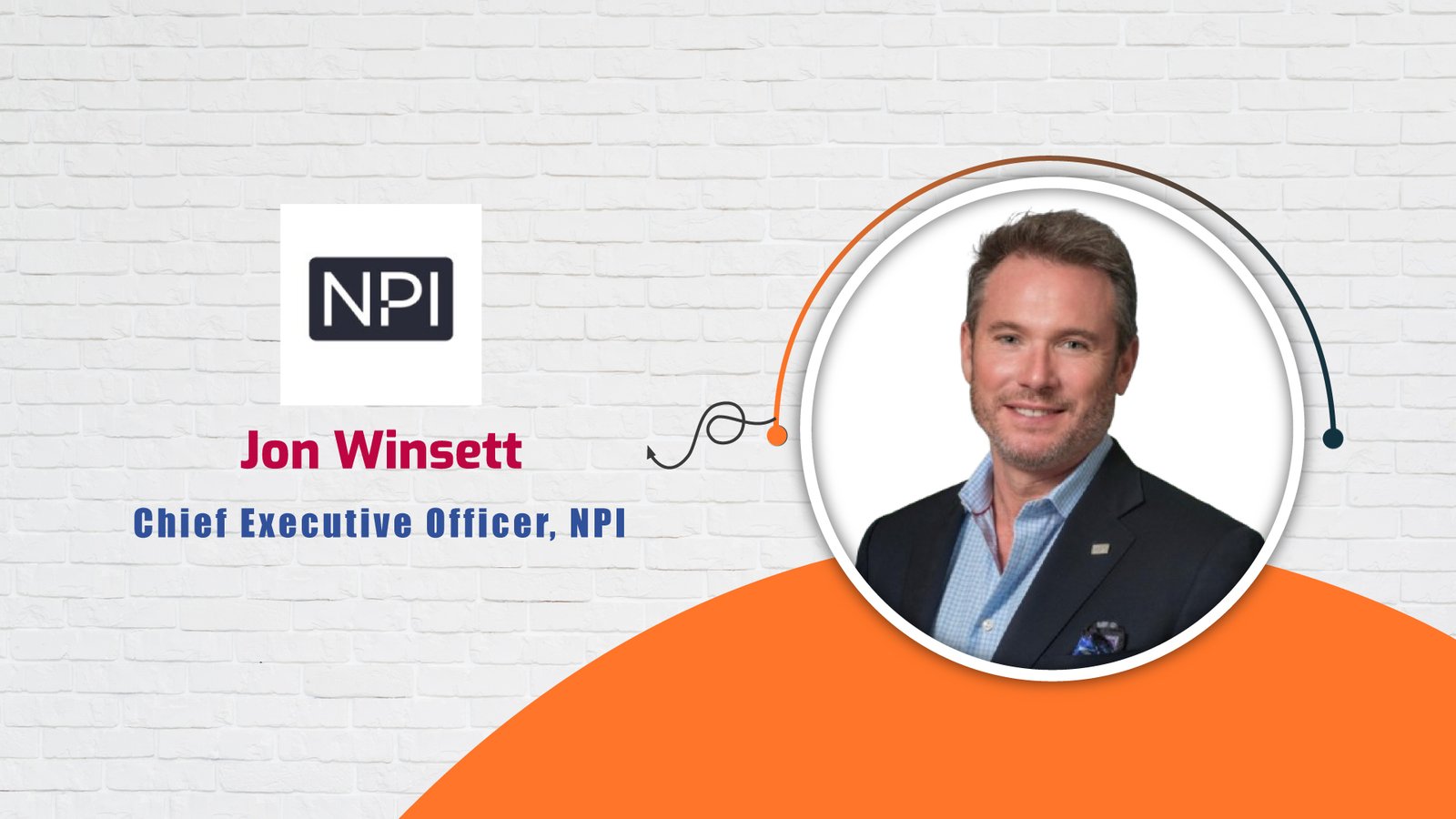
Jon Winsett
Chief Executive Officer, NPI
As CEO, Jon is responsible for defining NPI’s business strategy and driving the company’s growth. With more than 30 years of experience leading IT companies in the US and abroad, he fosters a success-oriented and accountable team environment based on trust, respect, commitment and comradery – all of which are instrumental to NPI’s success, and our clients’ success. Prior to NPI, Jon was VP of North American sales and UK Country Manager at Seagull Software, a publicly-traded enterprise software company. Jon shares his perspective on spend management as a frequent contributor to major news outlets such as CNN, Fox and CNBC. Outside of NPI, Jon is an avid boater and helicopter pilot, and an active participant in Atlanta’s philanthropic community. Jon holds a BS in Industrial Management from Georgia Institute of Technology.