
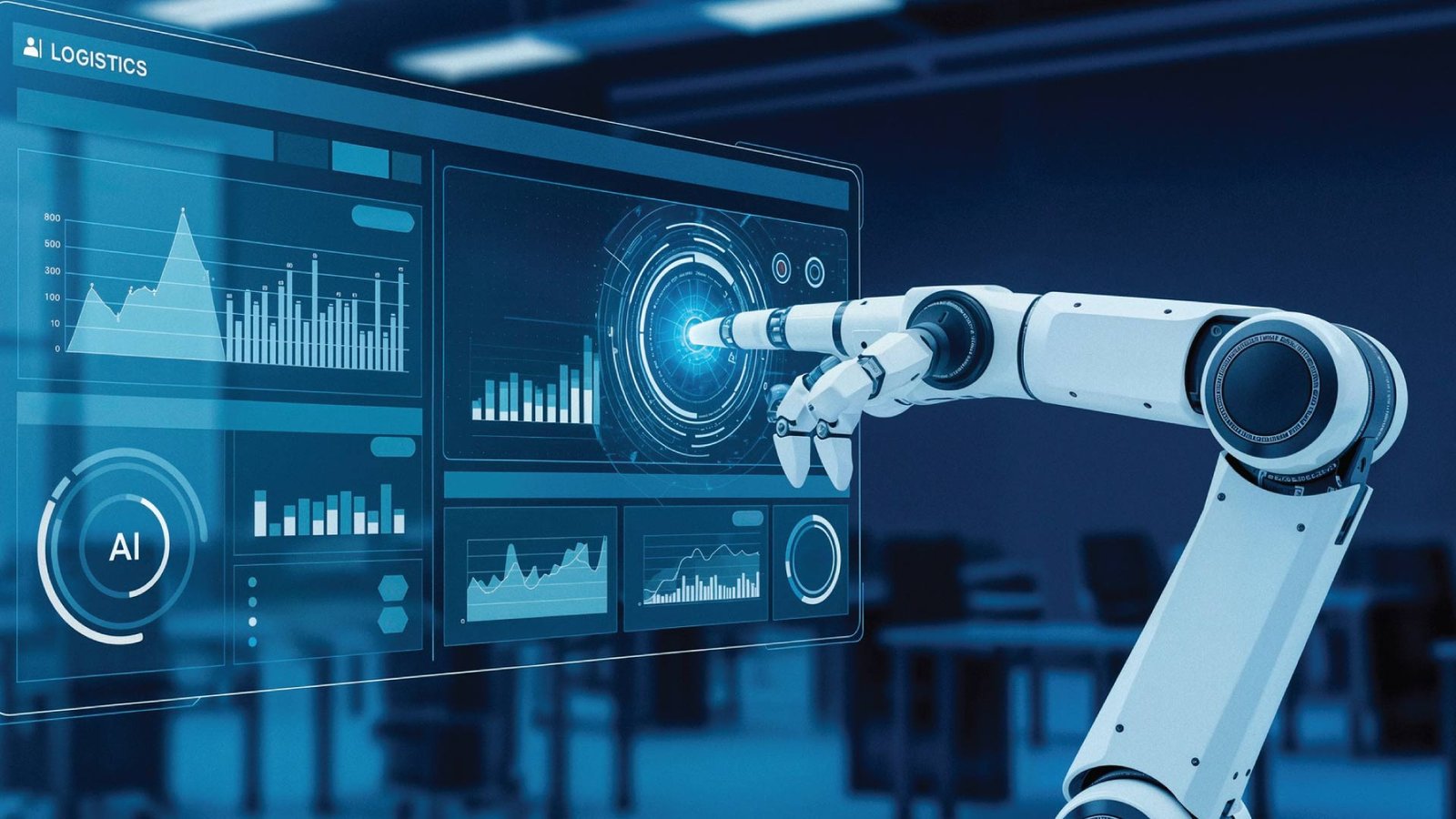
Agentic AI is reshaping workflow automation with autonomous decision-making and smarter operations.
The most valuable businesses in 2026 will be those that are the quickest to delegate decisions, even if they are not the quickest at automating tasks. According to the estimates made by analysts, more than 40 percent of large enterprises now execute at least one mission-critical workflow in at least some autonomous mode, a figure of single-digit proportions three years ago. It is a change that is not quite obvious yet significant: automation of the workflow no longer concerns efficiency. It is a matter of control, speed, as well as strategic leverage in a globally volatile economy.
This is the place where agentic AI on workflow automation no longer exists as an experimental promise, but as an operating reality.
Table of Content:
1. From Intelligent Automation to Autonomous AI Agents: Why This Shift Is Inevitable
2. How Agentic AI Improves Workflow Automation by Owning the Decision Loop
3. Where Agentic AI Is Scaling Fastest
4. Regulation and Governance
5. Incumbents, Challengers, and the New Automation Stack
6. Two Sides of the Same Autonomy Curve
Strategic Foresight
1. From Intelligent Automation to Autonomous AI Agents: Why This Shift Is Inevitable
Traditionally, the process of automating business processes had a foreseeable curve. Repetition was done through rule-based systems. Prediction was enhanced by machine learning. Co-pilots increased the productivity of the individual. By 2024, the majority of the gains of such approaches had reached a level. Automation was fragile, highly programmed, and relied on human escalation.
In 2026, the model is changing. Intelligent AI robots are now goal-oriented and not order-based. They evaluate the situation and make decisions, coordinate with other actors, and adjust depending on the results. Three forces converge to bring about this change:
- Operational complexity exceeds human coordination capability.
- Financial necessity to accomplish more withfewers skilled workers.
- Full-fledged AI coordination systems to enable multi-agent systems on a large scale.
What has come out of this is a photo-new breed of AI workflow that is self-managing systems, functions, and time zones.
2. How Agentic AI Improves Workflow Automation by Owning the Decision Loop
Smart systems suggest. Agentic systems act.
Finance operations. An example of this is accounting reconciliation done by autonomous agents within finance operations, flagging anomalies, instigating remediation, and escalation, which only occurs when risk thresholds are violated. In revenue, agents are dynamically reprioritizing pipes according to macro signals, buyer behavior, and internal capacity- without weekly reviews.
The next step will not be further automation, but end-to-end autonomous workflow management, in which agents:
- Trade-off speed, cost, and compliance.
- Orchestrate departmental action.
- Become an outcome learner as opposed to retraining cycles.
That is why the increasing influence of the agentic AI on the workflow robotization seems less of a productivity improvement and more of a reorganization of the business.
3. Where Agentic AI Is Scaling Fastest
Deviation is disproportionate–and tactical telling.
Venture capital is being flooded into the United States in the areas of agent-native platforms, orchestration layers, and verticalized workflow agents. Businesses are aggressively applying agentic AI in customer tasks, cybersecurity reaction, and financial management, where time translates into a limit and risk decrease.
In Europe, the adoption is more considered and arguably permanent. Governance is being built into agentic systems, designed according to the accountability, explainability, and risk classification requirements of the EU AI Act. The outcome is slow rollout, yet more institutional trust – especially in regulated industries.
Multinational companies around the world are all moving toward a common trend: sovereign AI applications or private-cloud applications, and internal agent governance councils. Innovation is moving towards more compact models of reliability, coordination, and policy-conscious autonomy.
4. Regulation and Governance
In 2026, regulation is not a back-story issue;e it is a design limitation.
The EU AI Act has become obligatory to establish accountability in autonomous decisions by organizations. Liability where AI agents do what they are designed to do, but harm people, is a growing legal issue in the US. Auditability has turned into a non-negotiable concept across jurisdictions.
This has brought about an innovation: agents that are governance-conscious, which record decisions, give explanations of trade-offs, and act within encoded policy limits. Businesses that have made governance an infrastructure and not overhead are becoming more and more dynamic and not sluggish.
The strategic reality is cruel: those companies that are not able to explain why an agent acted will not be allowed to act.
5. Incumbents, Challengers, and the New Automation Stack
Older vendors of automation are strained. The retrofitting of agentic abilities to RPA and BPM platforms has been challenging, and this has caused a boom in the number of acquisitions in the orchestration, memory, and agent coordination areas.
In the meantime, agent-native challengers are gaining ground by constructing systems on first principles-systems where autonomy is presupposed rather than limited. The market is diverging to specialized agent ecosystems, marketplaces, and orchestration layers.
Vendor strategy has become existential to the executives. It is not about feature depth anymore, but feature future-proofing of architecture.
6. Two Sides of the Same Autonomy Curve
The benefits of agentic AI in the case of autonomous workflow management are high:
- Automated operations with the least human intervention.
- Quick Strategic reaction to market changes.
- Outcome-driven and not effort-driven, new revenue models.
But the risks scale just as quickly:
- Accountability ambiguity in legal aspects.
- Ethical drift since agents maximize unintentional priorities.
- Failure in operation enhanced by speed and autonomy.
- Damage to reputation in the event of a decision by the system is not a valid solution.
That is why major organizations are spending as much on kill switches, audit layers, and human override mechanisms as they are spending on agents themselves.
Strategic Foresight
Working Agentic AI is not an IT project. It is a decision that is an operating model.
The boards and executive teams are supposed to be asking:
- What processes ought to be automated – and which ones would still have to be human-centered?
- Are agent-driven results clearly accounted for?
- Are we governance-architected at the cutting edge of AI architecture?
- Are we creating competitive advantage–or technical debt?
Within three years, the enterprises that will be the most successful will not be the ones with the most AI, but the ones with the most well-orchestrated human-agent systems. The increasing role of agentic AI in automating workflows is eventually transforming what an organization is not a chain of command among people and processes, but a web of purpose, action, and responsibility- between machines and people.
Explore AITechPark for the latest advancements in AI, IOT, Cybersecurity, AITech News, and insightful updates from industry experts!